The Hole Truth And Nothing Butt: 10 Things I Learned from the new Butthole Surfers Documentary

I finally watched the new Butthole Surfers documentary last month: The Hole Truth And Nothing Butt. Here are ten things I learned from the movie.

I finally watched the new Butthole Surfers documentary last month: The Hole Truth And Nothing Butt

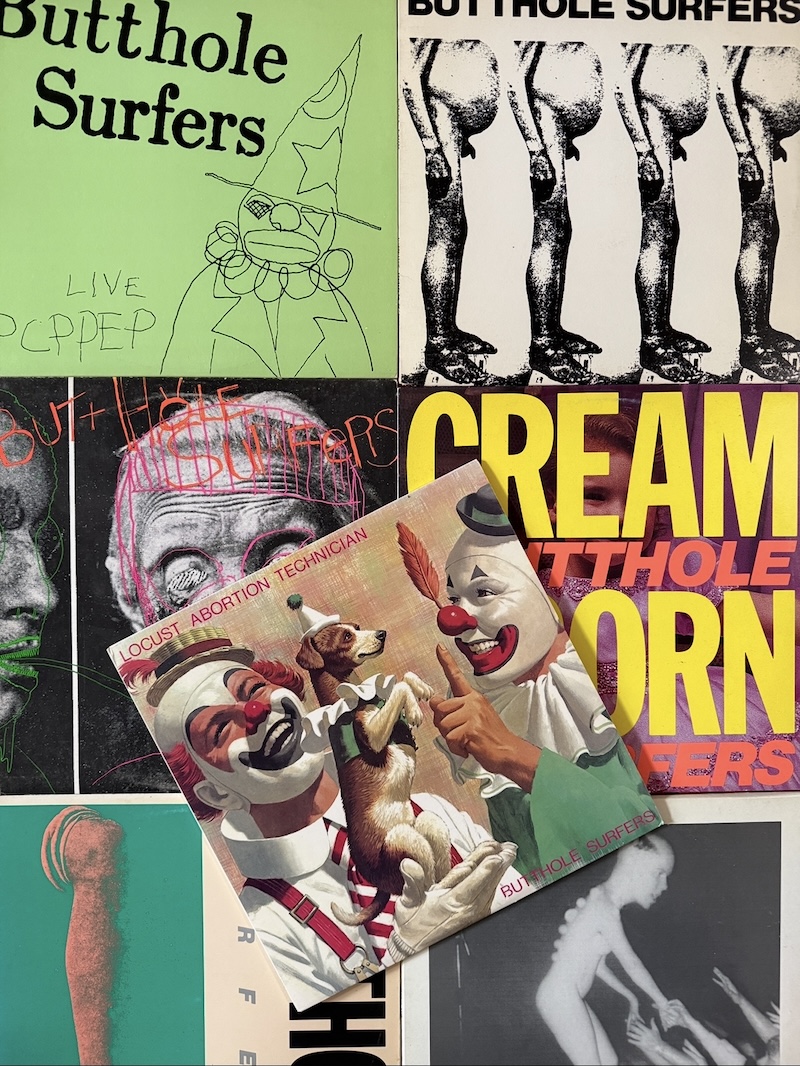
I got Rembrandt Pussyhorse when it came out in 1986 and became totally obsessed with the band and got everything they had done (still have them, see pic). Locust Abortion Technician seemed to up the ante next year and I was lucky enough to see them play on November 2, 1987 at One Step Beyond in Santa Clara, California. In retrospect I feel like this was the absolute peak of the band. Hairway to Steven was a huge disappointment to me when it came out in 1988 and I totally stopped following the band at that point. I had read about the Butthole Surfers in Our Band Could Be Your Life when that book came out in 2001 but forgot about many details until now. Anyway, here are ten things I learned last from the movie:

  1. They got their first record deal with Alternative Tentacles because their van happened to break down in front of the Tool and Die in San Francisco while the Dead Kennedys were playing there in 1982.
  2. The bass player I saw at that show was actually their 8th bass player. Super cool dude. JD Pinkus. Always thought his haircut was rad–he looked just like this when I saw them, and I grabbed this photo from the documentary. If anyone knows the photographer please let me know so I can credit them.
  3. The naked dancer I saw at that show (painted green, teeth blacked out) was Kathleen Lynch (AKA Ta-Da the Shit Lady).
  4. I knew their twin drummers weren’t actually twins. I didn’t know that the woman was Teresa Taylor, also famous as Pap Smear Pusher in the movie Slacker. She sadly passed away in 2023.
  5. The movie shown at the concert I went to was not a vasectomy surgery. It was a penis reconstruction surgery from a farmer who’d had a farm accident.
  6. The girl I was with at the show fainted. Apparently this was common at their shows because of the strobe lights.
  7. Speaking of Slacker, Richard Linklater was one of their first projectionists.
  8. Bob Forrest, who I had seen many times with Thelonious Monster, became friends with Gibby Haynes during the Johnny Depp Viper room days and remains friends with Gibby to this day. It was wild seeing the two of them together in the documentary.
  9. They got into a fight with Touch and Go after Hairway to Steven and sued them.
  10. Paul Leary learned producing from John Paul Jones after they signed with Capitol Records.
Camper Van Beethoven and the Sound of Mountain View

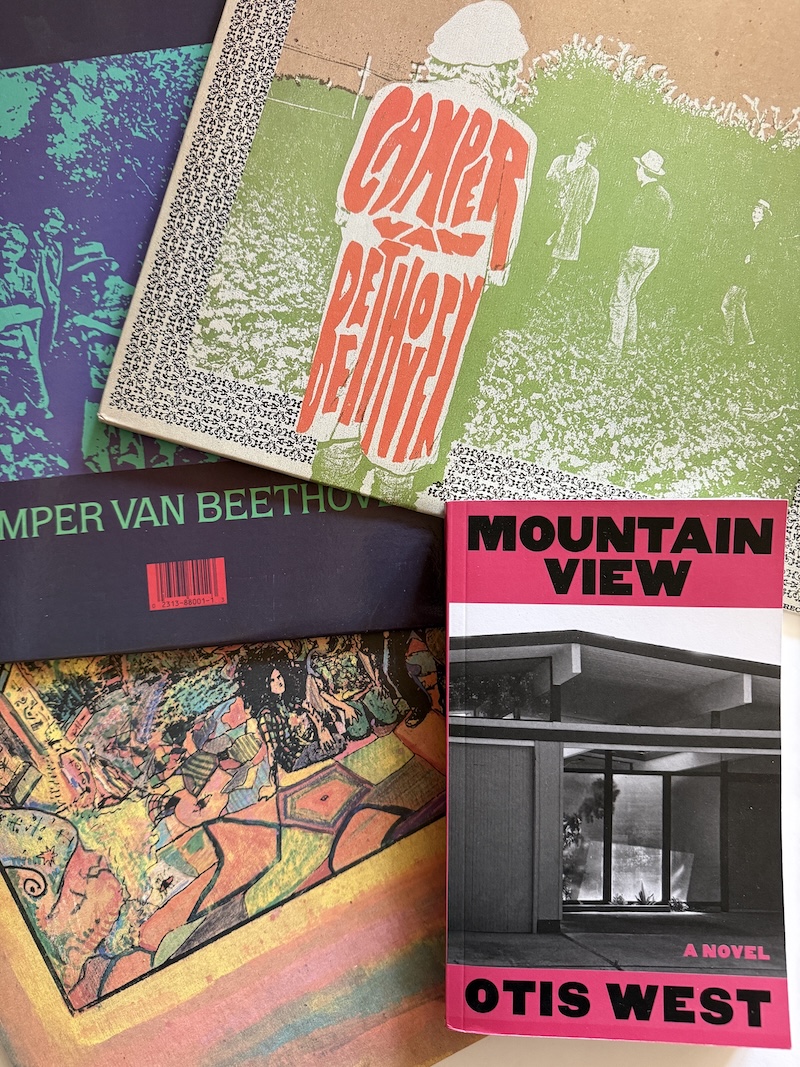
If I can think of any music to sum up the vibe of lazy San Francisco Bay Area summer days in the late 80s it’s Camper Van Beethoven. Formed in Redlands and Santa Cruz, they released their first three albums between 1985 and 1987. I bought these records as they came out and saw them play once or twice at the Fillmore in San Francisco. This music is part of the fabric of Mountain View.

Bay Area Radio in the 1980s: KOME, The Quake and KFJC

I woke up this morning thinking about SF Bay Area radio in the 80s and how I discovered new music. When I was younger, I mostly listened to the rock station KOME (don’t touch that dial, there’s KOME on it!”). I was in 7th grade and listening to KOME on December 8, 1980 when it was announced that John Lennon had been shot.

KQAK “The Quake” launched in 1982 with a new format that consisted of new wave, punk rock, post-punk, reggae and ska—one of the first commercial stations in the country to play this kind of music. A buddy and I used to drive up to San Francisco early in the morning to be part of the studio audience for the morning show with Alex Bennett. I first heard bands like The Smiths and The English Beat on KQAK.

Sadly The Quake went off the air in 1985, but by then I had started listening to KFJC, a college station based at Foothill College, that would play, literally, anything. I discovered so much punk rock through that station and learned about so many local $5 shows–Dead Kennedys, Butthole Surfers, Red Hot Chili Peppers. I was listening to KFJC in 1989 when I first heard Negative Creep by Nirvana. I immediately drove down to the Mountain View Tower Records and bought Bleach on vinyl. I managed to see Nirvana in 1990 at the Kennel Club in San Francisco (along with Tad and Dickless).

Those years and those sounds ended up shaping the world of my novel Mountain View.

Learn more about Mountain View

MXR Distortion+

How do you pair a distortion pedal with a novel set in Florence, Italy? Here’s how:

One night our hero Kevin misses the last bus home after being out at the bars. So he pops Zen Arcade into his walkman and walks back home through the cobblestone streets.

Bob Mould was known for plugging his MXR Distortion+ straight into the mixing board, a trick he likely used while recording Zen Arcade back in 1983.

From Wikipedia: As their EP Metal Circus was being released, Hüsker Dü entered the Total Access Studio in Redondo Beach, California to record their next album with SST producer Spot. The band recorded 25 tracks, with all but two songs (“Something I Learned Today” and “Newest Industry”) being first takes, in 40 hours. The entire album was then mixed in one 40-hour session; the entire album took 85 hours to record and produce and cost $3,200.

Learn more about Firenze

Boss DS-1

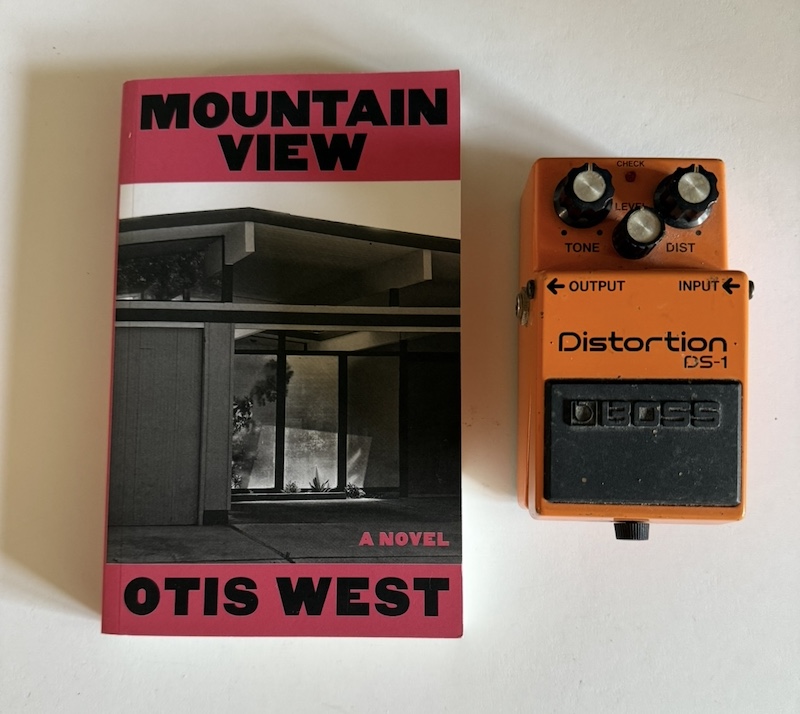
Mountain View is set during the summer of 1988. That same year I walked into The Starving Musician in Santa Clara and bought a Fender Mustang and this Boss DS-1 to use in the garage/punk band I was playing in.

A year later Kurt Cobain would make that same combo famous on Bleach. I managed to see Nirvana in SF at the Kennel Club in 1990 when they came through with Tad and Dickless. Full set here:

Learn more about Mountain View

Ibanez Tube Screamer

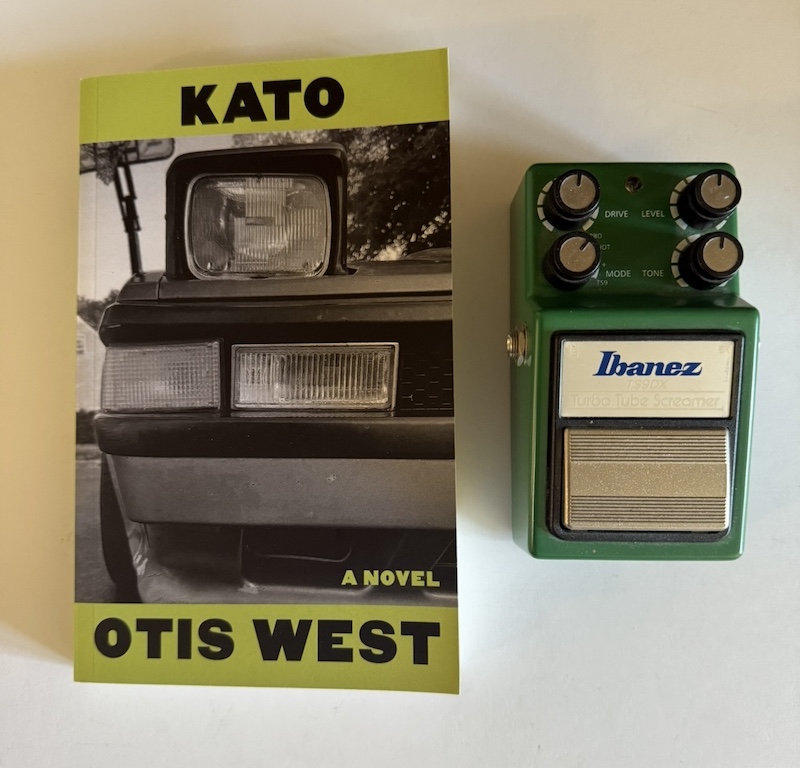
The Ibanez Tube Screamer is mentioned on page 10 of Kato:

The room was literally crammed wall to wall with band equipment. … There were two giant Marshall stacks, numerous sticker-covered guitars and basses, a few duct-taped mic stands, a PA and a battered-looking four-track. The floor was covered with cables and cords and various distortion pedals (on my first trip downstairs, I’d practically twisted my ankle on a bright green Ibanez Tube Screamer pedal).

Learn more about Kato